
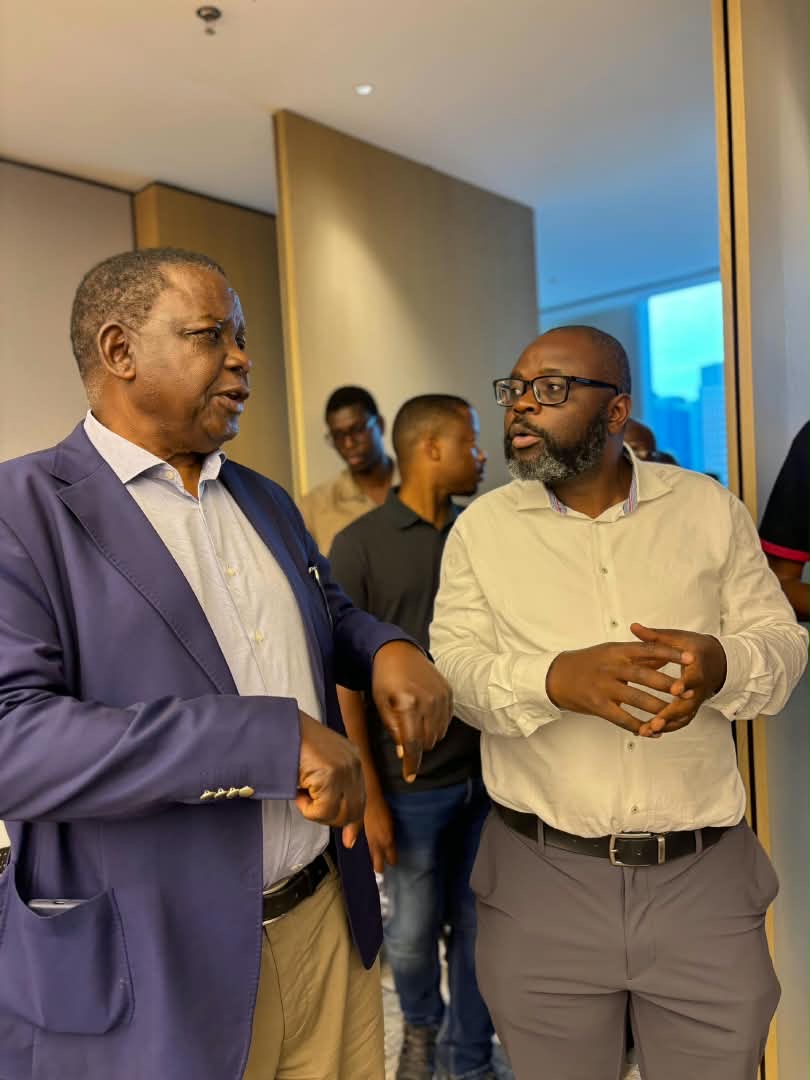
by Gideon Madzikatidze/Simbarashe Sithole
HARARE – A Zimbabwean delegation led by Deputy Minister of Mines and Mining Development, Honourable Fred Moyo, has returned from a two-week lithium benchmarking mission to China, describing it as critical to Zimbabwe’s push from raw exports to value addition.
The team was in China from 13 to 26 September 2026, with technical visits and business exchanges in Shanghai, Jiaxing, Quzhou, Xinyu, Nanchang, Chongqing, Suining, Ya’an and Chengdu.
The mission comes as Zimbabwe – Africa’s largest lithium producer supplying about 15% of China’s spodumene imports – enforces a ban on lithium concentrate exports to force local beneficiation.
Moyo said the trip was about understanding systems, not just plants.
“The lithium beneficiation drive took us to China to engage parent companies directly. A fully integrated value chain requires more than minerals – it needs technology, skills, R&D, infrastructure, reliable energy and suppliers,” Moyo said.
He said Zimbabwe will not copy China but adapt lessons:
“For us the significance is not replicating China’s model, but understanding the conditions that enabled it to build competitive industries.”
The delegation toured battery and cathode plants, lithium processing and slag facilities, and ports. It examined recovery rates, processing technologies, laboratory capacity, technology licensing, pricing mechanisms and skills certification systems.
The mission report notes that value addition is an ecosystem, not a single plant, requiring equipment, chemical inputs, logistics, energy and market access.
Moyo, who returned to the Mines portfolio in December 2025, has been enforcing tough conditions for lithium exporters – Bikita Minerals, Prospect Lithium Zimbabwe, Sabi Star, Kamativi, Sandawana and Gwanda – owned by Huayou Cobalt, Sinomine, Chengxin and Yahua, with over US$1bn invested since 2021.
“I can confirm that we gave some conditions… declaration of all minerals including tantalum and niobium, publication of financial statements and establishment of assay labs,” Moyo said then.
On the new export quota system introduced after the February ban, he said: “Individual companies got different levels of their export quotas.”
Government maintains the January 2027 deadline for full lithium sulphate processing will not shift, backed by Huayou’s US$700m investment at Arcadia and Sinomine’s US$500m at Bikita.
“This is an opportunity for complementarity rather than dependency,” Moyo said.