
by Gideon Madzikatidze
HARARE – The International Labour Organization has launched a new global guide at Africa Skills Week, warning Africa that its skills crisis is about governance, not just training.
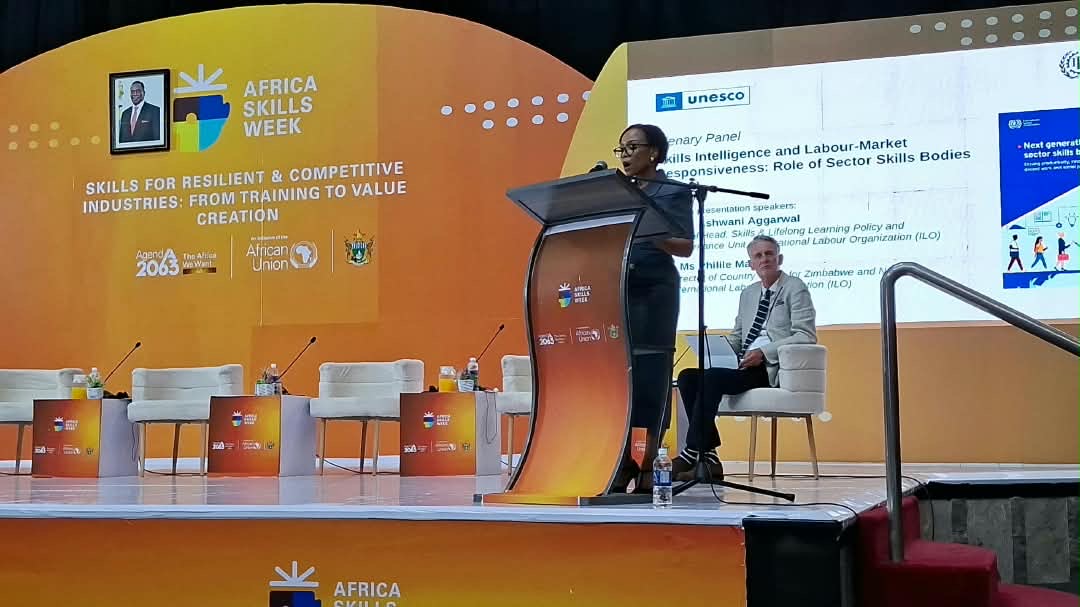
Titled ‘Next generation sector skills bodies: Driving productivity, innovation, decent work and social justice,’ the book was unveiled by ILO Specialist Mabel Masuku during the UNESCO plenary panel on Skills Intelligence and Labour-Market Responsiveness in Harare this Tuesday.
Presenting the publication to delegates, Masuku said the continent can no longer measure success by certificates.
“Africa has been counting certificates while employers are counting vacancies. We are training, but we are not translating that training into productivity, enterprise and decent jobs,” she said.
Drawn from evidence in 18 countries, the guide argues that Sector Skills Bodies are the missing institutional bridge that brings government, employers and workers together to anticipate skills needs.
“A qualification does not automatically mean a person has a skill that industry needs,” Masuku told the plenary.
“Sector Skills Bodies must become agile, evidence-driven and sustainable. They must use labour market intelligence to tell us today what welders, agro-processors and digital technicians we will need tomorrow,” she added.
Masuku said the next-generation model in the book moves away from old, underfunded advisory councils to tripartite bodies with legal mandates to set occupational standards, update curricula and advise on sustainable financing beyond government grants.
“If skills do not respond to the labour market, we are simply training for export and for unemployment. We need bodies that force training institutions to talk to factories, farms and firms,” Masuku said.
The launch directly answers the challenge issued by President Emmerson Mnangagwa and UN Resident Coordinator Dr Rosemary Kalapurakal at the opening of Africa Skills Week to shift from training to value creation, at a time when 10 to 12 million young Africans enter the labour market each year but only three million formal jobs are created.