
By Wallace Mawire
As countries prepare for a potentially very strong El Niño event, Zimbabwe’s investments in community-based early warning systems are demonstrating how timely climate information can help vulnerable households prepare for extreme weather, protect their livelihoods and strengthen resilience.
A new article published by the United Nations Development Programme (UNDP) to mark the 2026 International Day for Disaster Risk Reduction, under the theme “Resilience Starts at Home,” highlights how Zimbabwe’s Climate Adaptation, Water and Energy Programme (CAWEP) is helping bridge the gap between national weather forecasts and practical action at the household level.
Through CAWEP, implemented in partnership with the Government of Zimbabwe, 2.8 million people have been reached with early warnings and climate advisories, improving access to information that enables communities to anticipate floods, droughts and other climate-related hazards.
In Garahwa, Ward 28 of Chipinge District, Headman Mutape Jerera and his community are benefiting from improved access to weather warnings through Ndau Community Radio.
Supported by a solar-powered transmission booster installed through CAWEP, the community radio station can communicate weather alerts to households, including through radios integrated into mobile phones.
“If there is a threat of floods or if weather conditions are bad, the radio alerts us to prepare, so everyone is forewarned,” said Headman Mutape Jerera.
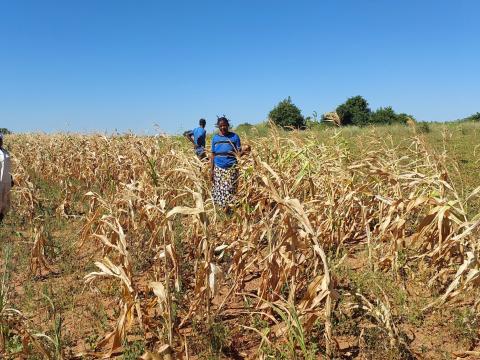
For communities that experienced the devastating drought associated with the 2023–2024 El Niño, access to timely, understandable information is increasingly important as new climate threats emerge.
The intervention illustrates how investments in renewable energy, local communications infrastructure and early warning systems can work together to strengthen community preparedness.
Beyond issuing warnings, UNDP’s approach emphasizes helping communities understand climate risks and translate forecasts into practical decisions.
Through farmer field schools, agricultural extension services and climate information initiatives, farming households are strengthening their capacity to assess available resources, adapt planting strategies, manage water more effectively and protect their agricultural livelihoods.
These interventions recognize that early warning systems are most effective when information reaches households in accessible languages and formats, with sufficient time for families to take preventive action.
The importance of these investments is growing as the world prepares for potentially severe climate impacts associated with El Niño.
According to the World Meteorological Organization’s,(WMO), September 2026 outlook indicated a near-100 percent probability of El Niño conditions persisting through February 2027, with the event expected to reach very strong intensity toward the end of 2026.
El Niño can significantly alter rainfall and temperature patterns, increasing the risk of droughts, floods and other extreme weather events, depending on geographic location.
For Zimbabwe, where agriculture and rural livelihoods remain particularly vulnerable to climate variability, strengthening early warning systems and household preparedness is an important part of building long-term climate resilience.
The UNDP places Zimbabwe’s experience alongside community resilience initiatives in Madagascar, demonstrating how locally accessible climate information can enable households to prepare for different manifestations of El Niño.
The article also highlights UNDP’s broader investments in early warning systems across more than 90 countries and its El Niño Anticipatory Capability 2026/2027, which focuses on identifying risks, strengthening preparedness, protecting vulnerable people and essential services, and supporting stronger recovery.
Zimbabwe’s experience demonstrates that effective disaster risk reduction requires more than accurate weather forecasts. It depends on sustained investments in local institutions, resilient infrastructure, climate information services and the capacity of communities to act.
As the 2026 International Day for Disaster Risk Reduction emphasizes, resilience begins at home, where families make the decisions that can protect lives, livelihoods and assets before disasters occur.
ABOUT THE PROGRAMME
The Climate Adaptation, Water and Energy Programme, (CAWEP), is implemented by the Government of Zimbabwe in partnership with UNDP. The programme supports climate adaptation through investments in renewable energy, water infrastructure, climate information services, early warning systems and resilient livelihoods.
By strengthening essential infrastructure and local capacities, CAWEP aims to reduce vulnerability to climate shocks while supporting sustainable development and improved service delivery.