
By George Makoni
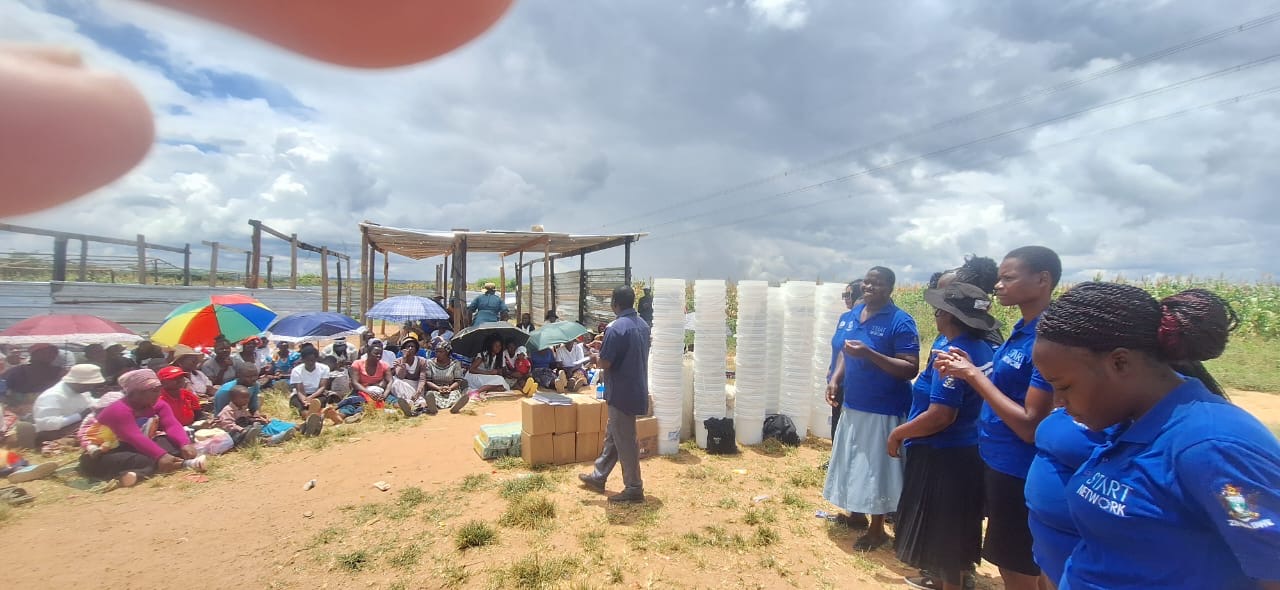
Community Water Alliance (CWA), together with its partners Oxfam and the Start Network, recently spearheaded an emergency Water, Sanitation and Hygiene (WASH) intervention in Ruwa, providing critical non-food items to vulnerable households affected by flash floods.
The emergency intervention targeted vulnerable and marginalized groups, including women, youth, child-headed households, orphans and vulnerable children, persons with disabilities, the chronically ill and elderly residents who are often the most affected during disasters.
Residents of Solomio in Ruwa recently received essential non-food items (NFIs) as part of the response aimed at protecting communities from heightened public health risks following flash floods that swept through parts of the area.
Flash floods frequently contaminate water sources by washing waste, debris and sewage into wells, streams and other domestic water points used by residents. Such contamination significantly increases the risk of waterborne diseases such as diarrhoea and cholera, particularly in densely populated communities where sanitation systems can easily be compromised.
It is against this backdrop that development partners moved in to provide essential hygiene support to help households maintain safe water practices and reduce disease risks in the aftermath of the flooding.
The programme, implemented in collaboration with Harare City Council, is part of a broader response targeting 375 000 households in Ruwa and other affected communities.
Beneficiaries received buckets with taps, bar soap and water purification chemicals (Water Guard) to enable households to treat drinking water and maintain proper hygiene. Dignity kits were also distributed to women and girls, while school stationery was provided to support children from vulnerable households.
Similar humanitarian support activities were also carried out in Kuwadzana, Epworth and Chitungwiza, where communities were also affected by flooding.
Speaking during the distribution ceremony, Ward 7 Councillor Charles Humbato commended the organizations for responding swiftly to the needs of affected residents.
“We are grateful to Community Water Alliance and its partners for this important gesture. Interventions such as these are critical in helping communities maintain proper hygiene and protect public health, especially after flash floods,” Humbato said.
He also emphasized the importance of partnerships between local authorities and development organizations in strengthening service delivery in the WASH sector.
“Non-state actors such as Community Water Alliance, Oxfam and the Start Network play a vital role in complementing government efforts. Their support helps ensure that communities have access to safe water and improved sanitation,” he said.
Councillor Humbato added that the local authority has already earmarked several sites for borehole drilling projects aimed at improving access to reliable water sources in the area.
“We have identified a number of places where boreholes will be drilled to improve water access for our residents. Partnerships with organizations such as Community Water Alliance remain important in achieving this goal,” he said.
Community Water Alliance WASH Officer Joylene Nyachuru said the intervention was designed to promote safer hygiene practices and reduce the risk of disease outbreaks following the floods.
“Floods often compromise sanitation and contaminate water sources, exposing communities to disease outbreaks. Providing items such as buckets with taps, soap and water treatment chemicals helps households maintain safe hygiene practices and protect their health,” Nyachuru said.
One of the beneficiaries, Gogo Samuriwo, an elderly resident, expressed appreciation for the assistance.
“These items will help us treat our water and keep our homes clean. We are thankful for the support we have received,” she said.
The intervention forms part of broader efforts by development partners working alongside local authorities to strengthen community resilience and safeguard public health in flood-affected communities.