
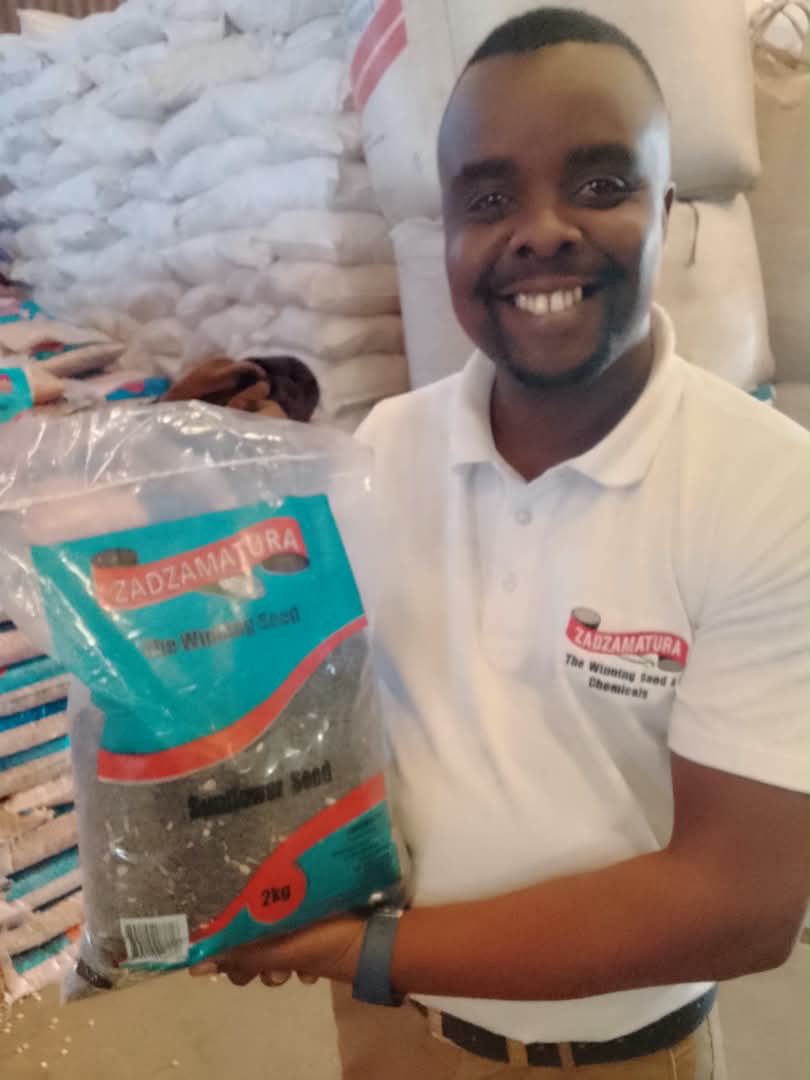
by Gideon Madzikatidze/Simbarashe Sithole
HARARE – Zimbabwean seed and agri-inputs firm Tocek Investments (trading as Zadzamatura) says climate-smart agriculture (CSA) and drought-tolerant germplasm are central to building food system resilience amid El Niño-induced climate variability threatening the 2025/26 cropping season across Zimbabwe and SADC.
Speaking during a media tour of its operations, executives said the sector must shift from rain-fed subsistence to precision agriculture, conservation agriculture (CA), and water-use efficiency to stabilise strategic grain reserves and arrest food insecurity.
Talent Ndige, Zadzamatura’s field production manager, underscored the role of smart agronomy.
“With erratic onset, prolonged mid-season dry spells and high evapotranspiration rates, we cannot rely on conventional tillage. Smart agriculture leverages soil moisture conservation, micro-dosing of NPK, drought-tolerant hybrids, and data-driven agronomy to optimise input use efficiency and ensure yield stability under water stress,” Ndige said.
He added that CA basins, cover cropping, and mulching are being promoted to improve soil organic carbon and reduce runoff and leaching.
Dennis Simbe, regional business development manager (Zadzamatura), said the firm is scaling regional trade to buffer shocks.
“We are eying regional markets to fight El Niño-induced shocks. Food security is a regional public good. We are also offering early-maturing, drought-escaping varieties – sorghum, pearl millet, and short-season maize – to ensure household food availability,” Simbe said.
“We are pursuing market access into Mozambique, Zambia, Angola, and Namibia to build a regional buffer stock and reduce import parity pressure,” he added.
Senior Agronomist, Blessing Hatidani said breeding targets abiotic stress tolerance.
“Our varietal portfolio focuses on heat and drought tolerance, low nitrogen use efficiency, and short crop phenology. These help arrest food insecurity in Zimbabwe and Africa by ensuring crop establishment with late rains and by closing yield gaps in marginal environments,” Hatidani said.
He said seed systems strengthening, certified seed uptake, and farmer training on integrated soil fertility management (ISFM) are key to moving from food aid dependency to production-led food security.
Zadzamatura is working with AGRITEX and Grain Marketing Board to roll out demonstration plots in agro-ecological regions four (IV) and (V)