
By Desire Tshuma
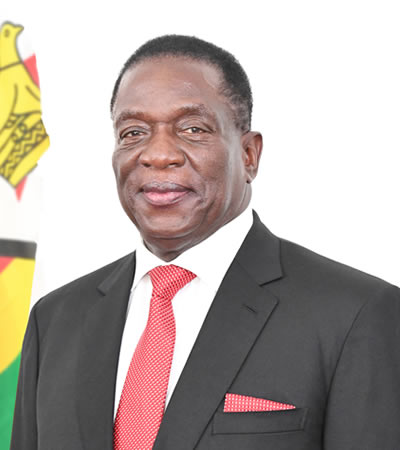
Harare — Artisanal and small-scale mining leaders have welcomed President Emmerson Mnangagwa’s renewed commitment to formalisation, financing and equipping small-scale miners, saying the move affirms the sector’s central role in Zimbabwe’s economy, but they want the pledge to quickly translate into practical support.
In his State of the Nation Address, President Mnangagwa said mining remains a key anchor of economic development and Government is strengthening the Mining Promotion Corporation and the Zimbabwe Geological Survey to undertake systematic exploration and develop bankable projects capable of attracting investment. He also pointed to expansion projects underway in the gold sector.
The pronouncements have drawn a positive response from small-scale miners, who account for a significant share of gold deliveries to Fidelity Gold Refineries and employ hundreds of thousands of Zimbabweans.
Nyasha Magadhi, President of the Young Miners for Economic Development and Chairman of the Young Critical Minerals Producers of Zimbabwe, said the focus on formalisation could help move small-scale mining from largely informal operations to structured, commercially viable enterprises.
“The President’s reaffirmation that formalisation, financing and equipping of small-scale gold mining will remain a priority is a huge boost for us,” Magadhi said. “It means our members are seen, heard and valued as producers, entrepreneurs and employers.”
Magadhi said formalisation must be backed by practical measures that enable miners to secure mining rights, access capital and invest in productive equipment. He said YMED has been working with youths, women, war veterans and disadvantaged communities on claim registration and other initiatives to bring more operators into the formal economy.
“We want our miners to formalise and move towards world-class operations. Formalisation opens doors to financing, markets and partnerships,” he said.
Financing remains the biggest constraint, according to miners.
Magadhi called for financing models that reflect the mining production cycle, including gold-backed lending, revolving funds and equipment-financing facilities.
“Small-scale miners need affordable, structured capital. Short-term loans that suffocate production are not financing; they are debt traps,” he said.
His position was echoed by Zimbabwe Miners Federation President Henrietta Rushwaya, who said the SONA remarks reinforced that ASM is not peripheral but integral to the mining economy.
“When the President affirmed in his SONA that the formalisation, financing and equipping of small-scale gold mining and other mineral operations will remain a priority for Government, he reinforced an important principle: small-scale miners are not peripheral participants in Zimbabwe’s mining economy, but genuine partners in the country’s economic development,” Rushwaya said.
Rushwaya called for continued funding of the Gold Development Initiative Fund through Fidelity Gold Refineries and the resuscitation of the Mining Industry Loan Fund to address capital shortages.
Magadhi also welcomed the emphasis on systematic exploration through the MPC and ZGS, saying better geological information would reduce risk and improve viability for small-scale operators.
“Zimbabwe is under-explored, and our miners have been mining blindly, which is costly,” he said. He said greater access to affordable exploration services and equipment would allow miners to establish the extent and quality of mineralisation before committing resources.
“The commitment to improve the formalisation of ASM is welcome and aligned to the National Development Strategy 2. We urge the Government to consider exploration equipment to improve the viability of artisanal and small-scale gold mining in the medium to long term,” he said.
Former Geological Survey of Zimbabwe director Paul Chimbodza also welcomed the renewed focus on exploration, describing systematic geological work as indispensable to the future development of the country’s mineral resources.
Beyond finance and exploration, miners say access to appropriate technology is critical. Magadhi pointed to mercury-free processing technologies and more efficient recovery plants as areas where targeted support could improve production and environmental performance.
“Equipping our members with mercury-free processing solutions and efficient recovery plants will increase production, protect our environment and improve the livelihoods of mining communities,” he said.
He has also advocated low-cost exploration technologies, including portable drilling equipment and aerial surveying, to make geological services more accessible to smaller operators.
ASM leaders say the next step is a coordinated implementation framework bringing together Government, miners, financiers, equipment suppliers and technical institutions.
“The President has set the vision. Now we need a coordinated mechanism for formalisation, access to finance, equipment leasing and technical support — one that responds directly to the practical challenges we face on the ground,” Magadhi said.
For the sector, the impact of the SONA commitments will be measured by whether miners can more easily access mining rights, geological information, productive equipment and affordable capital.
“The President has reaffirmed the priority. Our collective responsibility now is to turn that commitment into implementation, production and lasting economic opportunity,” Magadhi said.