
By Own Correspondent
As global tensions over critical minerals intensify, with China reinforcing its grip on rare earth exports and building billion-dollar battery material plants across Asia and the Middle East, young miners in Zimbabwe are stepping forward—eager not to be left behind.
Zimbabwe, home to Africa’s largest lithium reserves and an increasingly strategic player in the global energy transition, is witnessing a generational shift. Emerging local producers are not only welcoming Chinese investment, but actively advocating for deeper integration into the global supply chain—beginning with domestic beneficiation and extending to green energy infrastructure.
“We see ourselves as part of this global realignment,” says Nyasha Magadhi, Chairman of the Harare headquartered Young Critical Minerals Producers of Zimbabwe (YCMPZ).
“China’s presence in Zimbabwe is not about extraction alone—it is about industrialization, value addition, and futures thinking. We as young producers want to complement that effort by building competence, pushing for processing capacity, and ensuring Zimbabwe is not a pitstop, but a full node in the global battery supply chain.”
Magadhi’s comments come as China ramps up strategic interventions globally. Beijing recently rolled out a tracking system for rare earth magnets and issued stricter export controls. Meanwhile, investments such as Zhongke’s US$1.1 billion lithium battery materials plant in Oman further consolidate China’s hold over the critical minerals-to-energy value chain.
For Zimbabwe’s junior miners, this is both an inspiration and a call to action.
Thanking China: Tariff Removal and Investment Inflows
Magadhi was explicit in expressing gratitude for China’s supportive trade policies, particularly the removal of tariffs on Zimbabwean critical minerals, which has significantly enhanced the competitiveness of local producers in the world’s largest battery materials market.
“China opened its doors to us when global markets were uncertain. The tariff elimination was not just a trade concession, it was an act of strategic partnership that has allowed young Zimbabwean miners to scale up, access premium prices, and reinvest into our operations,” Magadhi said.
Since 2021, Chinese investors have committed approximately US$4 billion to Zimbabwe’s lithium sector, with major players including Zhejiang Huayou Cobalt, Sinomine Resource Group, Chengxin Lithium, Yahua Group, and Tsingshan Holding Group driving the country’s beneficiation agenda . The flagship Arcadia Technology Zimbabwe plant, a US$400 million facility owned by Prospect Lithium Zimbabwe (a Huayou subsidiary), is set to commission Africa’s first lithium sulphate plant within weeks, with annual production exceeding 60,000 metric tonnes. Total investment by Huayou Cobalt in Zimbabwe’s lithium value chain now stands at US$1.1 billion, encompassing mining operations, concentrators, and sulphate processing capacity.
Prospecting the Future: New Lithium Plants on the Horizon
Beyond existing operations, young miners are actively prospecting and developing new lithium processing capacity. Magadhi confirmed that YCMPZ members are engaged in exploration and plant development across multiple projects, ensuring that Zimbabwe’s lithium revolution is not confined to a few large players.
“We are not waiting for opportunities to be handed to us. We are prospecting new ground, conducting feasibility studies, and positioning ourselves to build the next wave of processing plants,” he said.
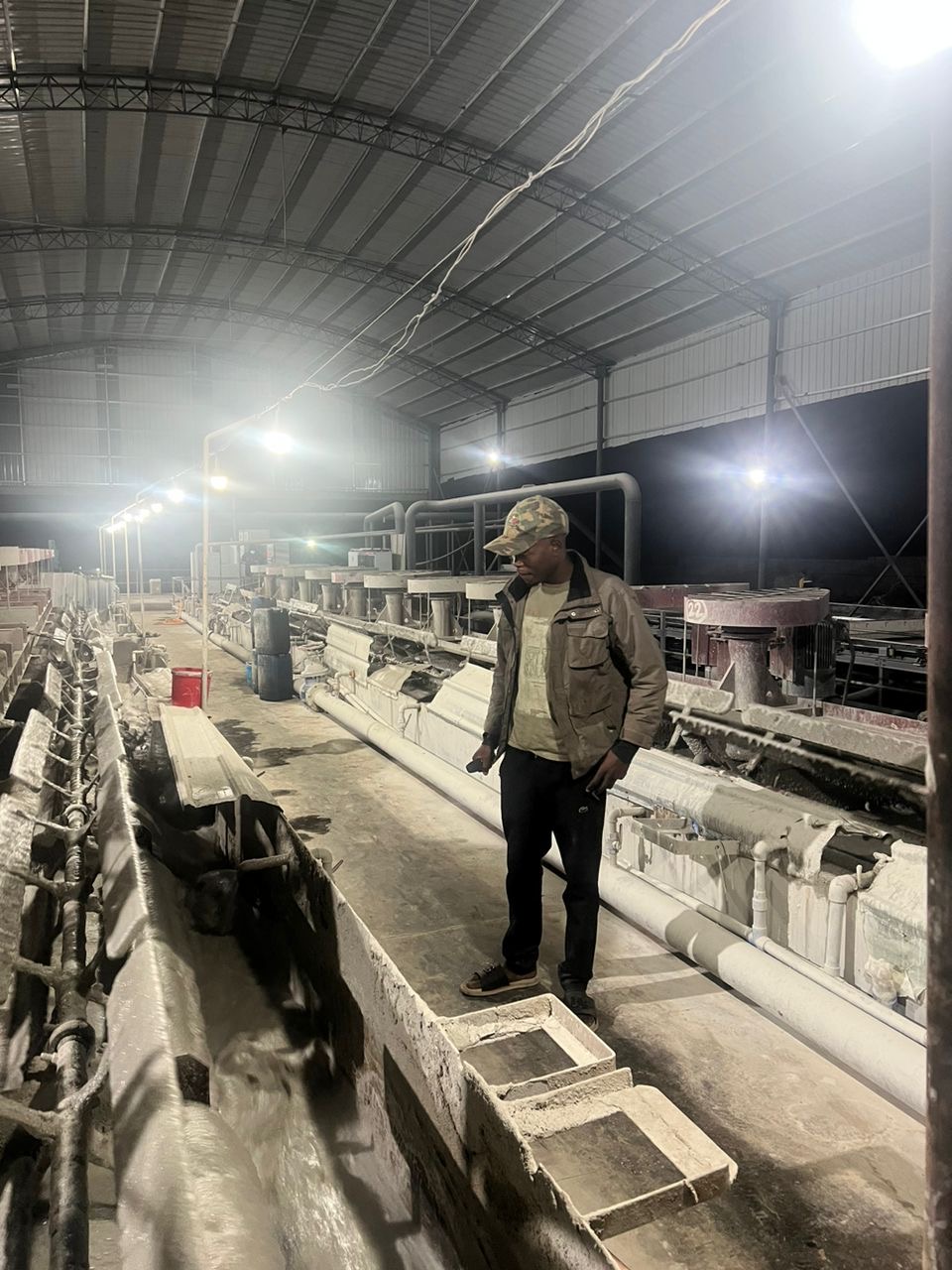
Magadhi himself holds a 15% stake in the Hao Lithium Processing Plant in Midlands province, a US$30 million investment that exemplifies the growing participation of indigenous youth in downstream mineral beneficiation. The plant represents a concrete example of young Zimbabweans moving beyond artisanal mining into structured, capital-intensive processing operations.
A New Generation of Mining Entrepreneurs
Across Zimbabwe’s mining landscape, a new breed of young entrepreneurs is building substantial processing operations that span multiple minerals and value chains.
Nyasha Chido, through his company Ionosphere Investments, has established a significant lithium processing plant in Harare’s Bluffhill industrial area. The facility produces lithium concentrates with a targeted annual output of 36,000 tonnes, with plans to scale up to 70,000 tonnes—positioning Ionosphere among the country’s top four lithium producers . The company has secured export authorization from the Ministry of Mines and Mining Development and operates across multiple minerals including tin, tantalum, and beryl . Ionosphere’s integrated approach—from mining to processing to export—demonstrates the sophisticated level at which young Zimbabweans are now participating in the critical minerals value chain.
“Ionosphere Investments is uniquely positioned as one of really only new battery metals companies to do value addition,” Chido has previously stated, explicitly supporting the government’s ban on raw lithium exports .
In the chrome sector, Darel Mubu has emerged as a leading young industrialist. Through his company BlackBull Mining Services, Mubu provides specialized consultancy services including plant design, optimization, and project management for small-scale miners . Beyond consultancy, Mubu has established a chrome mining and processing facility in Maahonaland West, one of Zimbabwe’s premier chrome-producing regions. His operation focuses on chrome washing and beneficiation, ensuring that the mineral leaves Zimbabwe in a processed state rather than as raw ore .
Mubu also serves as Vice President Business and International for Junior Chamber International Kumalo (JCI) and works closely with organizations like the Young Miners Foundation (YMF) to build youth capacity in Zimbabwe’s mining economy . His dual role as operator and capacity-builder exemplifies the holistic approach young Zimbabweans are bringing to the sector.
The Young Miners Foundation, with which Mubu is closely associated, has acquired a 300-hectare chrome concession in Mashonaland West and launched the “Chrome Processing Initiative” project in collaboration with the Zimbabwe Artisanal Miners Association (Zama) . The project aims to create employment for at least 500 people while promoting structured, professional chrome beneficiation .
The Second Republic: Raising Young Millionaires
Magadhi was unequivocal in praising the Second Republic under President Emmerson Mnangagwa, whose Vision 2030 has deliberately opened economic space for young Zimbabweans to participate in the mainstream mining economy.
“The Second Republic has created an environment where young people can genuinely become millionaires—not through speculation, but through real productive capacity in critical minerals,” he said. “We are seeing a generation of young Zimbabweans owning processing plants, holding equity in major projects, and building intergenerational wealth. That was unimaginable a decade ago.”
“We thank His Excellency President Mnangagwa for believing in us. The Second Republic has not just talked about youth empowerment—it has created the policy framework, the access to resources, and the confidence for young people to invest, build, and grow.”
This sentiment is backed by concrete policy action. The government has facilitated partnerships between young miners and established players; for example, over 5,000 small-scale miners in Shurugwi District have benefitted from a US$1 million mining equipment facility provided by Chengxi Investments, part of efforts to boost youth and women participation in the extractive sector . Midlands Minister of State for Provincial Affairs and Devolution, Honourable Owen Ncube, noted that such initiatives showcase “the entrenchment of Public-Private Partnerships and Joint Ventures that bolster GDP growth and improvement of community livelihoods through employment creation” .
Skills Transfer and Technical Capacity Building
Wayne Mudamburi, President of the Association of Junior Mining Professionals of Zimbabwe (AJMPZ), underscored the alignment between local aspirations and China’s long-term outlook.
“As an Association, we believe that junior miners should not only be explorers or producers of raw materials. We must be innovators, ESG custodians, and beneficiation pioneers. China’s roadmap shows us what’s possible. Our members want to move from pit to plant—to be processors, not just suppliers,” Mudamburi said.
Mudamburi emphasized that AJMPZ is currently rolling out technical skills programs and seeking partnerships to localize parts of the lithium and rare earth processing value chain. The Association believes that Zimbabwean youth can be at the heart of Africa’s green economy—especially if they are given policy support and access to capital .
“We cannot emphasize enough how vital skills transfer is, especially in an industry that relies heavily on cutting-edge technologies. Battery manufacturing is complex, and if we want to become a competitive player in this space, we need to invest in training engineers, technicians, and other professionals,” AJMPZ Secretary-General Ms Hazel Karoro has previously stated .
Training initiatives are already underway. The Young Miners Foundation, in collaboration with Ngayin Consultants and supported by the Zimbabwe Youth Council, has conducted “Fundamentals of Chrome Washing Management” training in Mashonaland West , equipping young miners with essential skills in chrome processing, plant optimization, and environmental compliance . These programs directly support national goals of youth empowerment and economic value addition .
A Geopolitical Tipping Point
The international race for rare earths and battery metals has reached a tipping point. Auto industry groups in the U.S. and EU are sounding alarms over Beijing’s recent rare earth export curbs, which have already impacted motor and magnet supplies for electric vehicles.
For Zimbabwe, this environment presents both risk and opportunity. The country has banned lithium ore exports and is pushing for beneficiation—a policy shift that Chinese firms like Huayou Cobalt, Sinomine, and Chengxin Lithium have embraced by investing in concentrators and future conversion plants . The government has outlined a roadmap that will see a total ban on lithium concentrate exports from around 2027, with major projects advancing concentrator plants to meet this timeline.
But as global superpowers jostle for access, local players worry about being sidelined unless given a clearer stake.
“We welcome China’s seriousness in long-term planning,” Magadhi noted. “But we also want to ensure that young Zimbabweans are building wealth, skills, and sustainable businesses within these new value chains. It should be a partnership—not just a transaction.”
Both YCMPZ and AJMPZ are advocating for policies that encourage local ownership in downstream operations, including cathode and anode manufacturing, battery recycling, and even small-scale energy storage innovation.
“It’s not enough to export concentrate,” says Mudamburi. “If Zimbabwe wants to remain relevant, we must also start thinking about how our minerals can power African EVs, local energy grids, and circular economies. We don’t want to remain consumers of finished technologies—we want to be contributors to the technologies themselves.”
President Mnangagwa has consistently challenged young Zimbabweans to occupy economic space and drive the country’s transformation. Addressing over 30,000 youths at the National Youth Day celebrations in Marondera, he declared: “The targets in our National Development Strategy 2 and Vision 2030 demand young people who are diligent, focused, hard-working and patriotic. Go ahead and occupy the space. Deliver more results in agriculture, mining, tourism, manufacturing, among SMEs, as well as in the science, technology and innovation arena” .
In that spirit, the young mining leadership in Zimbabwe is hoping to emulate China’s approach, not just in terms of investment, but also in long-term, integrated thinking.
As the world grapples with rising protectionism, shifting alliances, and fragile supply chains, Zimbabwe’s youth are making a different bet: that strategic collaboration with China, rooted in shared beneficiation and local empowerment, may offer a more stable and sustainable route.
For now, the next phase of Zimbabwe’s critical minerals revolution may be defined not just by the value of its rocks, but by the vision of its youngest miners—and the Second Republic that believed in them.