
By – Political Desk
Allegations that Zanu PF Youth League deputy commissar Taurai Kandishaya was induced with a vehicle and a refurbished homestead in Goromonzi have reignited debate within the ruling party over the growing influence of money in internal political processes.
The claims, circulating widely within party structures, have been cited by critics as emblematic of a broader and troubling trend in which financial muscle is increasingly being used to cultivate political loyalty and influence often outside formal party systems.
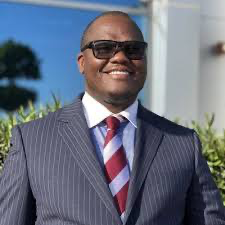
It is against this backdrop that Presidential Special Adviser on Investment, Paul Tungwarara, delivered a strong defence of grassroots-based leadership at a lively Zanu PF rally in Nyanga,Manicaland, over the weekend, warning that wealth-driven political ambitions threaten the party’s founding revolutionary values.
Tungwarara challenged what he described as the emergence of parallel centres of power funded by wealthy individuals who, he said, were conspicuously silent when President Emmerson Mnangagwa came under attack from disgraced former war veteran Blessed Geza.
“Leadership has nothing to do with wealth; it is about being anointed by God Himself,” Tungwarara said.
“True leaders are moulded from the lowest level, sometimes while herding goats, not manufactured through money.”
He stressed that Zimbabwe’s future leaders must emerge organically through proven service, sacrifice and moral grounding, warning that attempts to buy political relevance undermine party unity and ideological clarity.
Tungwarara’s remarks were widely interpreted as a rebuke of business figures allegedly seeking to leverage financial resources to influence succession politics and manipulate party structures.
The reaction from some quarters was swift. Instead of engaging with the substance of his message, certain surrogates including former MP Temba Mliswa launched personal attacks, with some issuing veiled threats suggesting Tungwarara risked becoming “collateral damage.”
Political observers say such responses point to factions more concerned with preserving personal influence than safeguarding party cohesion and revolutionary ethos.
Tungwarara has been closely associated with several flagship empowerment programmes, including the Presidential Borehole Drilling Scheme and the War Veterans Fund, initiatives designed to deliver tangible benefits to ordinary citizens. Critics aligned with business interests have, however, been accused of attempting to undermine these programmes in favour of opaque systems that channel state resources through private networks.
Unlike the shadowy patronage structures allegedly linked to wealthy businessmen operating through proxies, Tungwarara has publicly acknowledged shortcomings within government initiatives.
His admission that funds meant for a vendors’ group were misappropriated and his commitment to corrective action has been cited by supporters as rare evidence of transparency and accountability within elite political circles.
He has also consistently voiced support for President Mnangagwa’s national development agenda, including the proposed constitutional roadmap towards 2030, arguing that stability and respect for constitutional processes are essential for sustained economic growth.
Tungwarara contrasted this approach with what he described as reckless, wealth-fuelled manoeuvres and backroom succession schemes that risk destabilising both the party and the country.
By speaking out, Tungwarara has ignited a wider debate on the future direction of Zimbabwean politics.
To his supporters, he represents a defender of servant leadership and party integrity pushing back against what they see as the creeping commercialisation of politics and advocating for a Zimbabwe where leadership is earned through service to the people, not dictated by the size of one’s bank account.