
By Staff Reporter
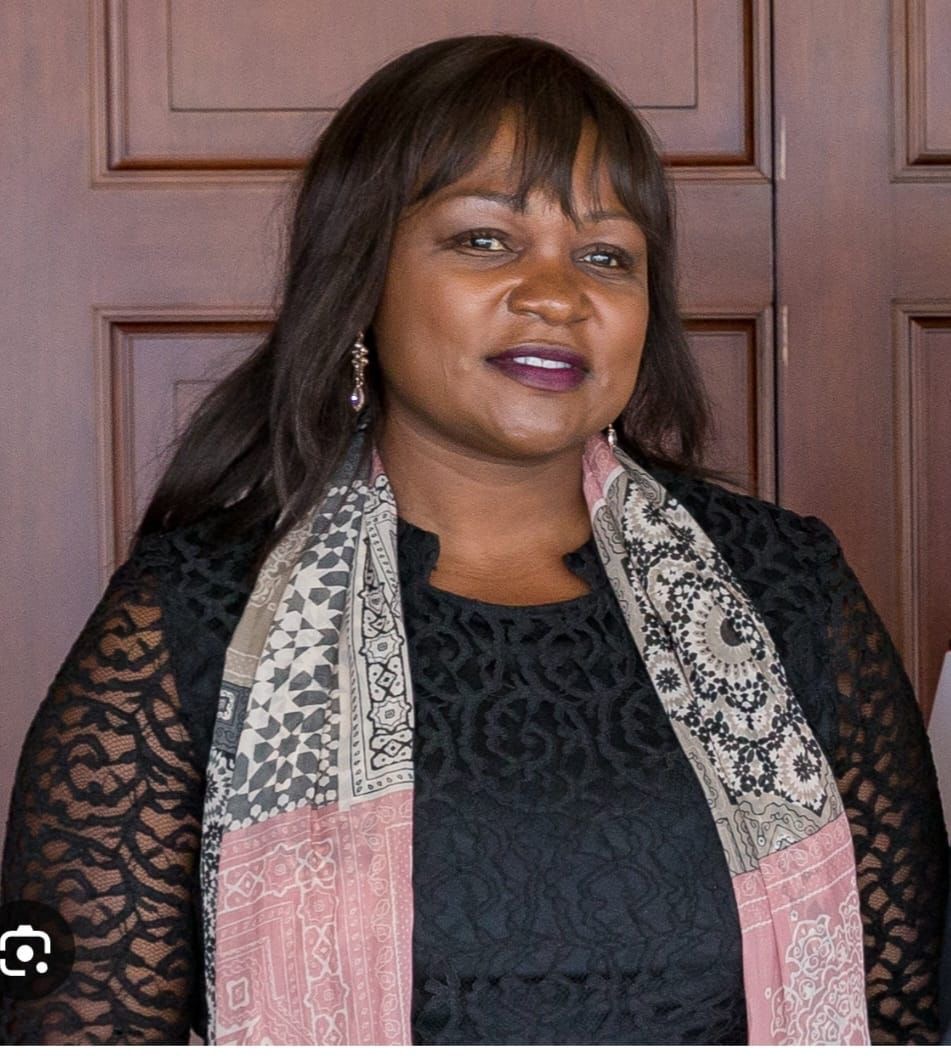
HARARE – Attorney General, Virginia Mabiza says the proposed constitutional amendments are designed to consolidate national stability, modernise governance and strengthen institutional continuity rather than advance the interests of President Emmerson Mnangagwa.
Her remarks come amid debate over government proposals to refine key constitutional provisions, including adjustments to the framework governing presidential elections.
While some analysts have predicted legal challenges, officials maintain that the reforms are anchored in constitutional principles and intended to reinforce long-term policy consistency.
Legal experts note that the proposals place emphasis on institutional resilience, clarity in governance structures and smoother policy implementation.
According to government legal authorities, refining constitutional processes is expected to enhance administrative efficiency and promote stability in national leadership transitions factors widely regarded as essential for sustained economic and social development.
Addressing to the claims that the reforms were designed to benefit Mnangagwa personally, Mabiza dismissed the suggestion, stressing that the measures are not tailored to any individual office bearer.
“In no way whatsoever, infact more aligned with His Excellency’s principled constitutionalism against amendments for personal gain we preserved two key provisions intact:
“Section 91(2): ‘A person is disqualified for election as President or appointment as Vice-President if he or she has already held office as President under this Constitution for two terms, whether continuous or not, and for the purpose of this subsection three or more years’ service is deemed to be a full term.’ Amending this would have appeared partisan or personal to His Excellency.
“Section 328(7): ‘An amendment to a term-limit provision, the effect of which is to extend the length of time that a person may hold or occupy any public office, does not apply in relation to any person who held or occupied that office, or an equivalent office, at any time before the amendment.’ This remains untouched.
“We totally respect the constitution and drafted it in a manner that allows continuity without interference with the entrenched provisions.
“The amendments are not personal but rather for posterity and to positively reform the governance and electoral system of our country,” Mabiza said.
She further explained that the reforms should be understood within a broader institutional development agenda aimed at reinforcing democratic structures while ensuring that governance mechanisms remain adaptable to national needs.
By maintaining entrenched safeguards while refining operational provisions, the amendments seek to balance constitutional continuity with progressive reform.
Government legal authorities say the Bill is expected to improve coherence within the constitutional framework by addressing ambiguities and ensuring alignment across provisions. The reforms are also viewed as a step toward enhancing predictability in governance processes an outcome officials say strengthens investor confidence, administrative effectiveness and national cohesion.
She underscored that the reforms are intended to serve the broader public interest, positioning them as part of a forward-looking effort to strengthen institutions and support Zimbabwe’s long-term development trajectory.
“These amendments are institutionally robust, historically pivotal and in the national interest.
“The Bill modernizes and streamlines various aspects of the Constitutional architecture while upholding the 2013 constitution.
“The amendments are part of a broader constitutional reforms aimed at refining governance frameworks and an increased focus on institutional efficiency, political inclusivity and long term national stability,” Mabiza said.
“These amendments are constitutionally sound, in the national interest, and part of broader reforms to modernize governance through legislation and ensure stability. When all this stems from our supreme Law it becomes easier to implement the reforms.
“As Attorney General, I draft legislation for the Government in terms of section 114 of the Constitution.
“Whilst it is within my mandate to recommend certain changes to the law, I however draft legislation in accordance with instructions from the Government and in this instance it is the Minister of Justice who has the responsibility to administer the constitution.
“Some of the amendments are meant to ensure that all provisions in the Constitution are consistent, unambiguous and align with the objectives and principles set out in this Constitution.”
Officials say the reform process reflects a continued commitment to structured constitutional evolution one that prioritizes institutional strength, legal certainty and national stability as foundational pillars for Zimbabwe’s future governance.